This tutorial explains how to generate your OAuth 2.0 client credentials in Gmail
1. Create New Project
Login to console.cloud.google.com.
From the top left, click your projects, create a new project, and give it a name.
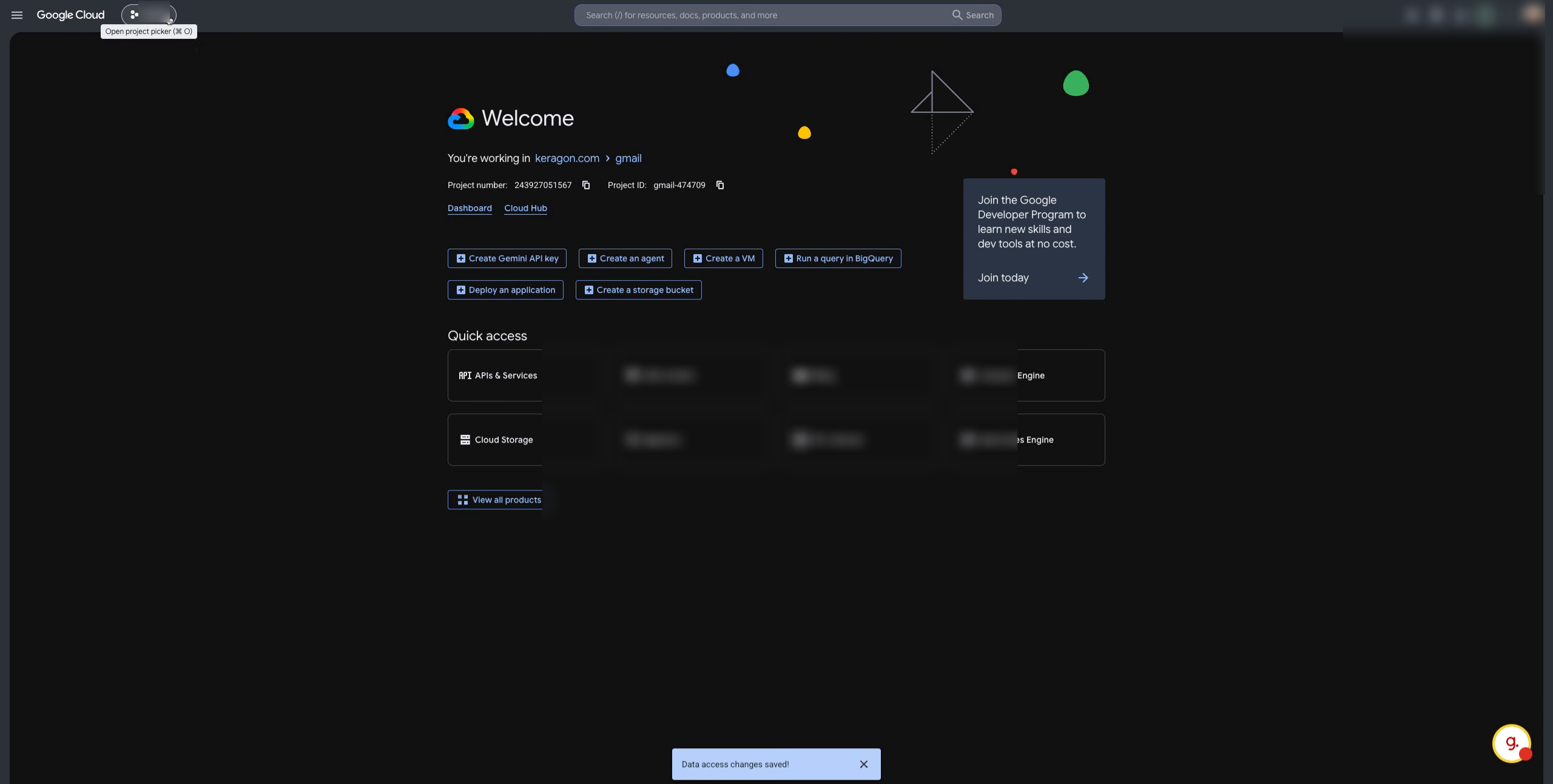
2. Access API and Services Menu
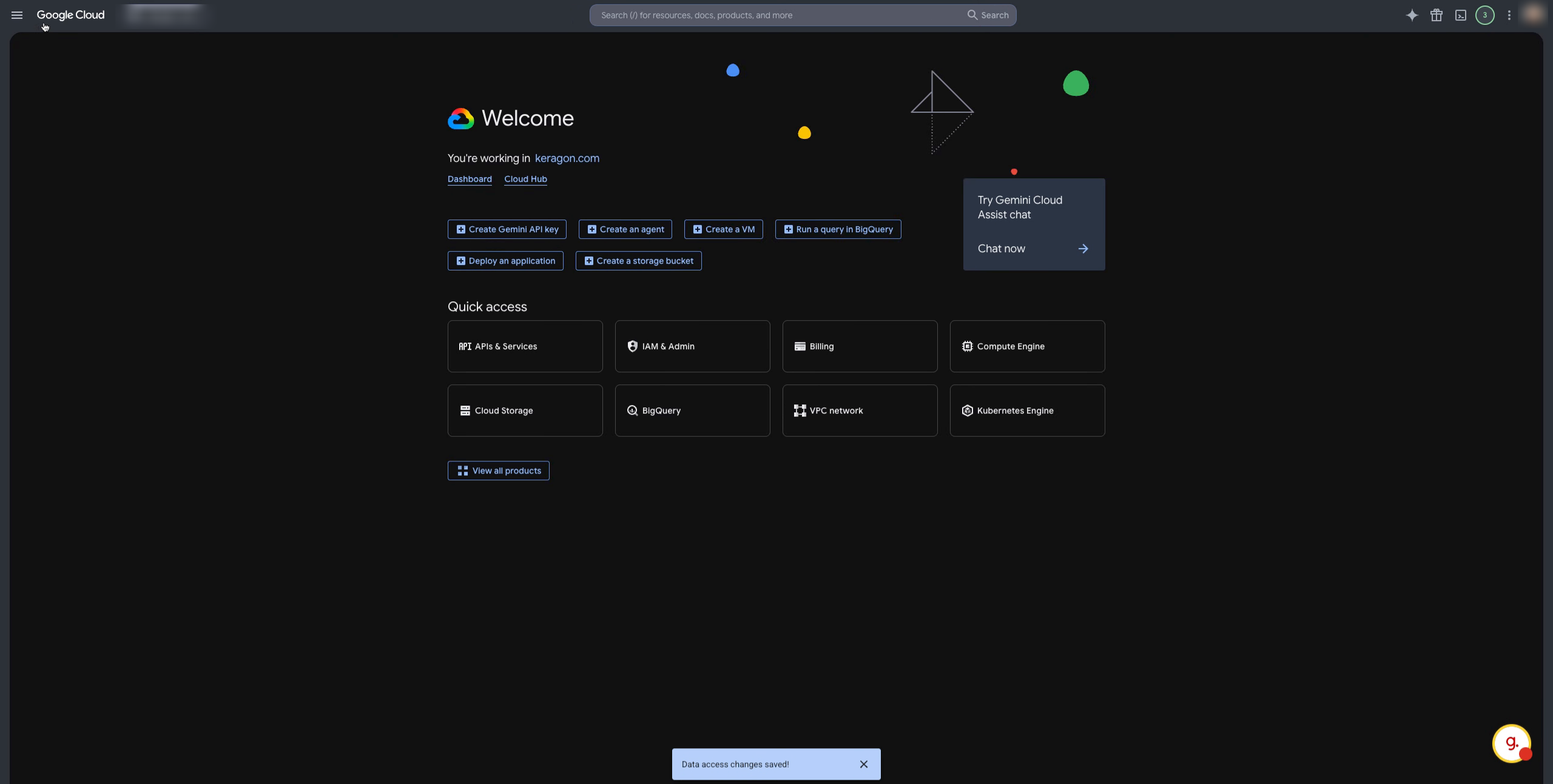
Next, open the left menu and go to API and services.
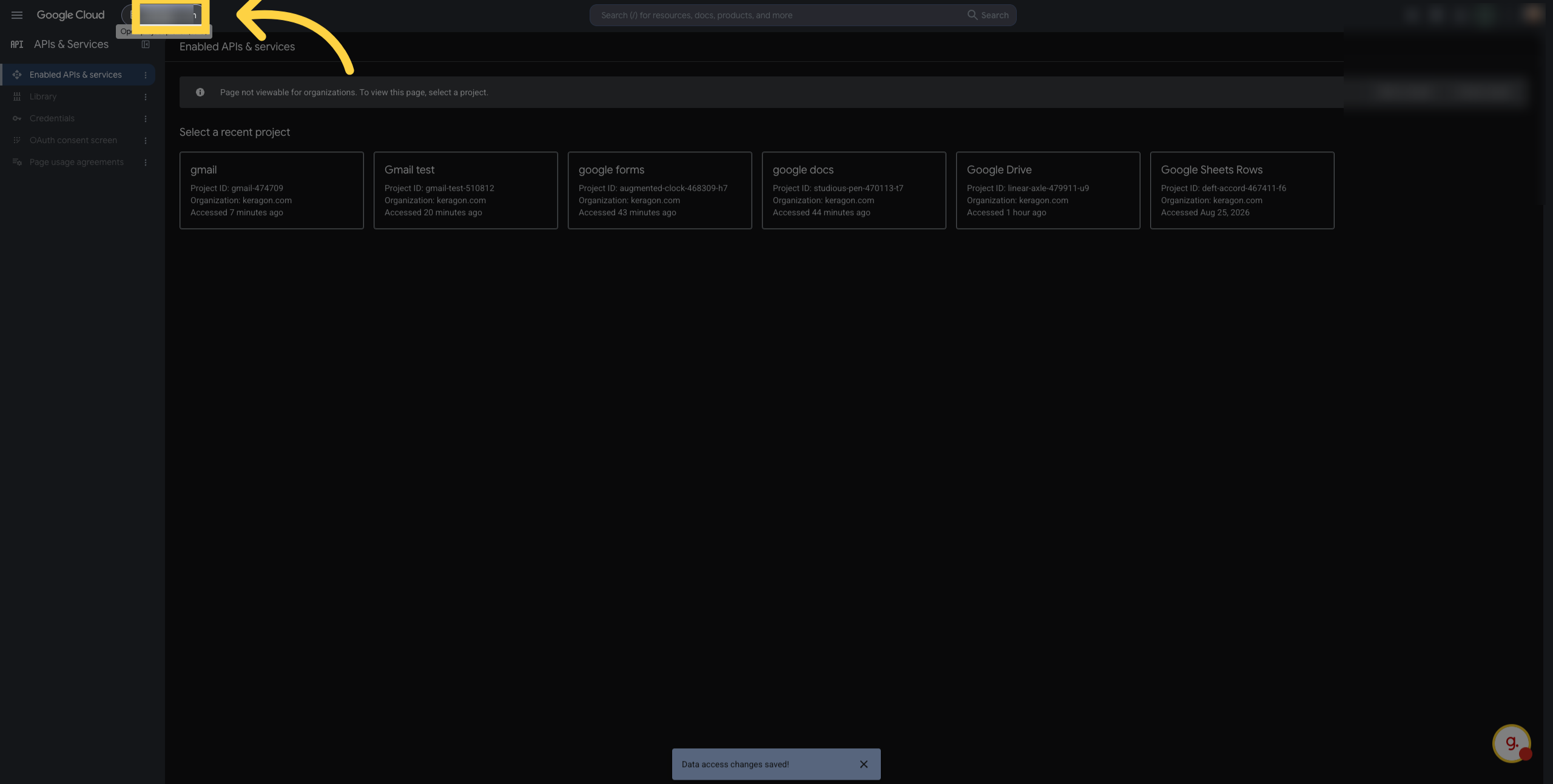
3. Select Your Project
Click your project to select your created project.
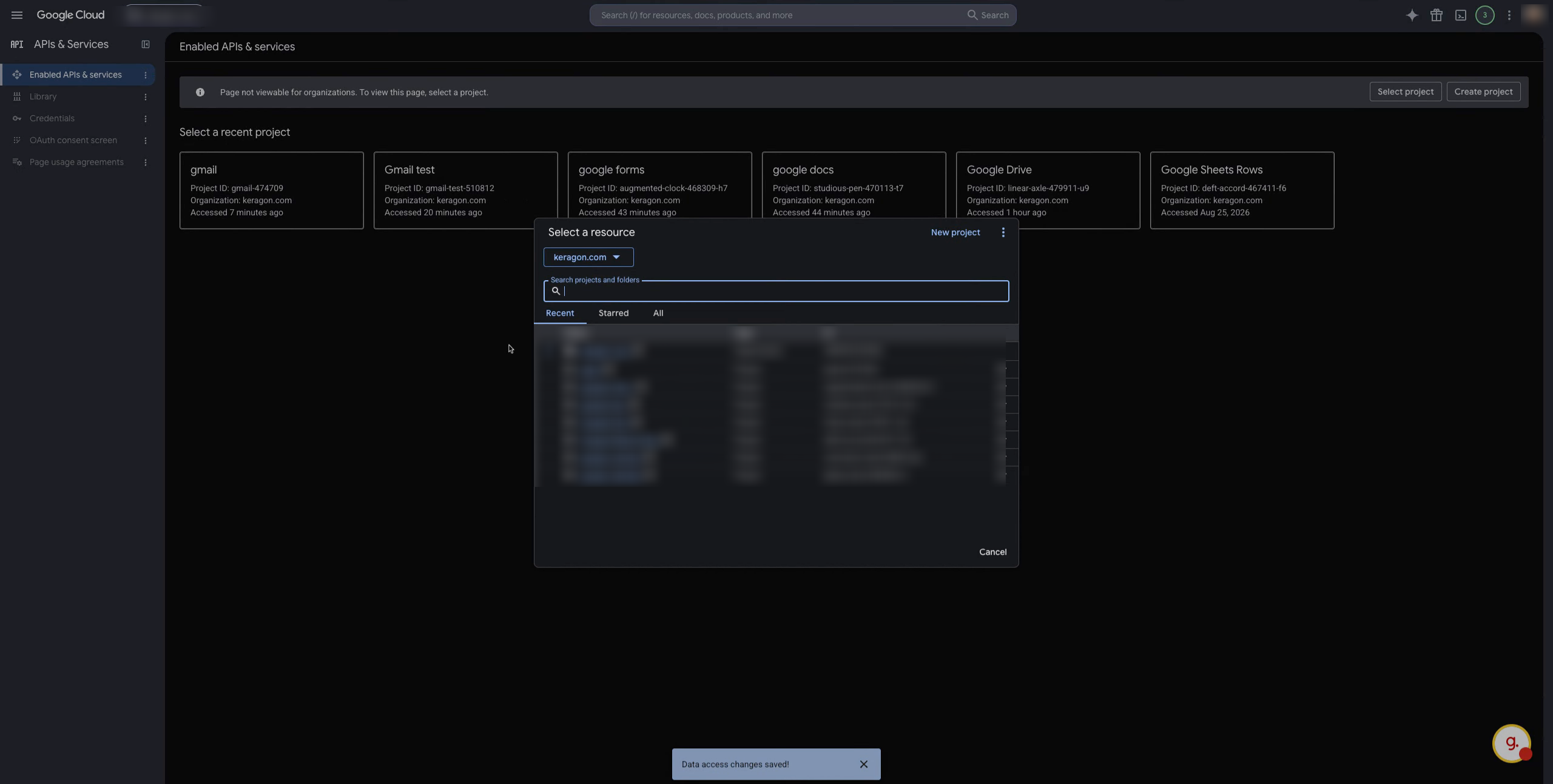
4. Choose Your Project
Select your project to continue configuring the Gmail connector.
5. Navigate to Consent Screen
Go to the consent screen and select clients to manage OAuth settings.
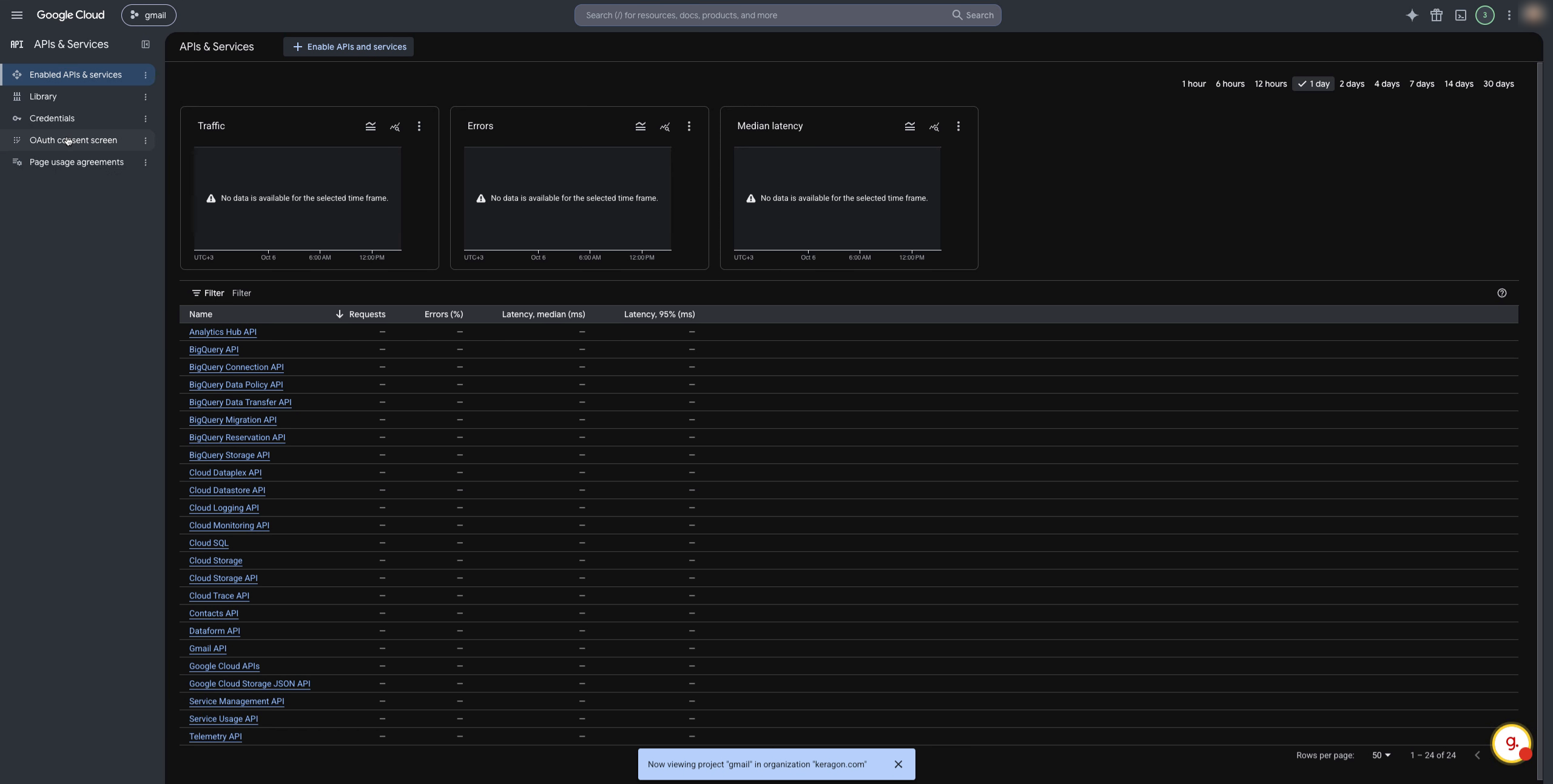
6. Create New OAuth Client
Next, create a new client for your application.
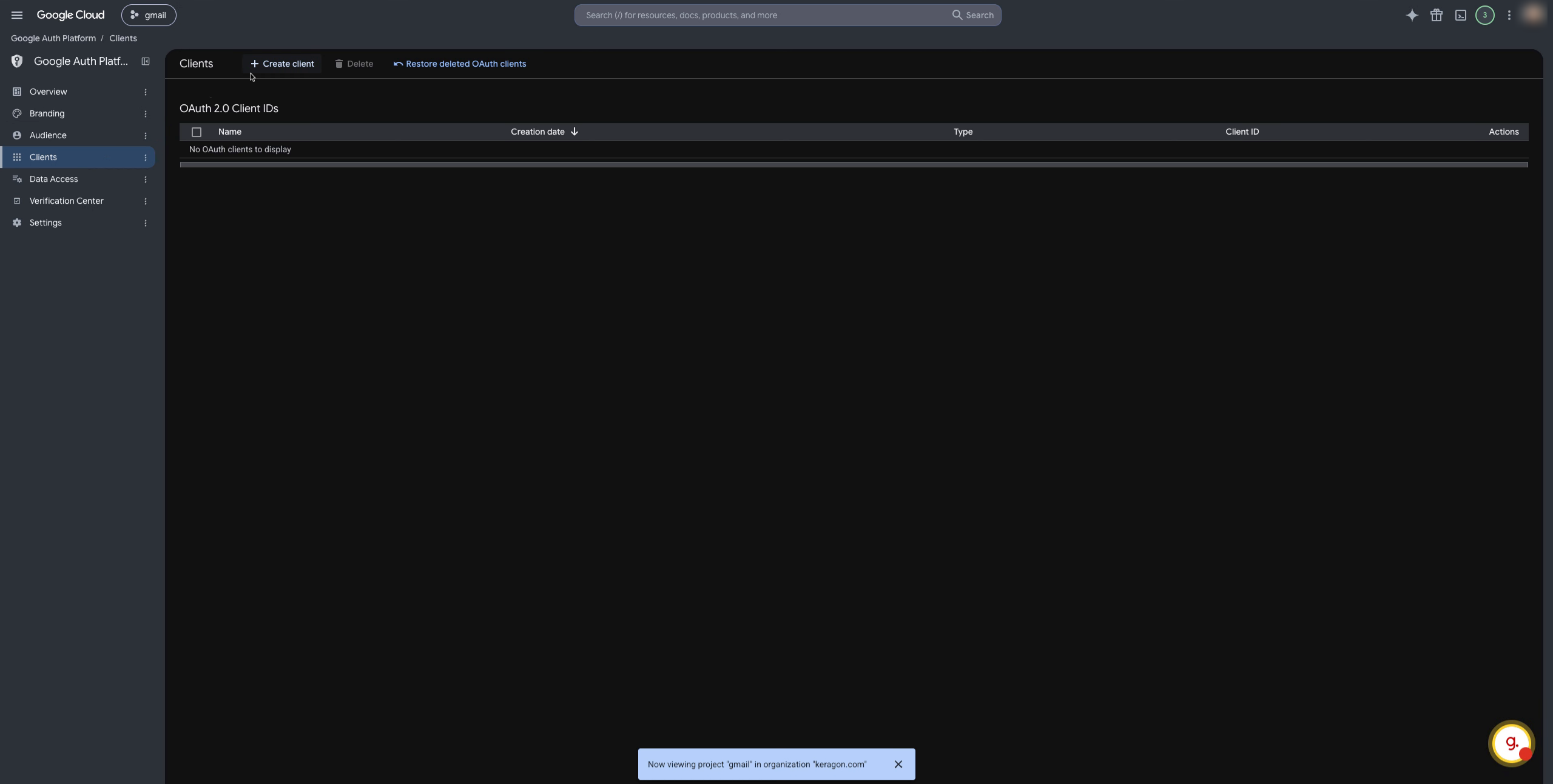
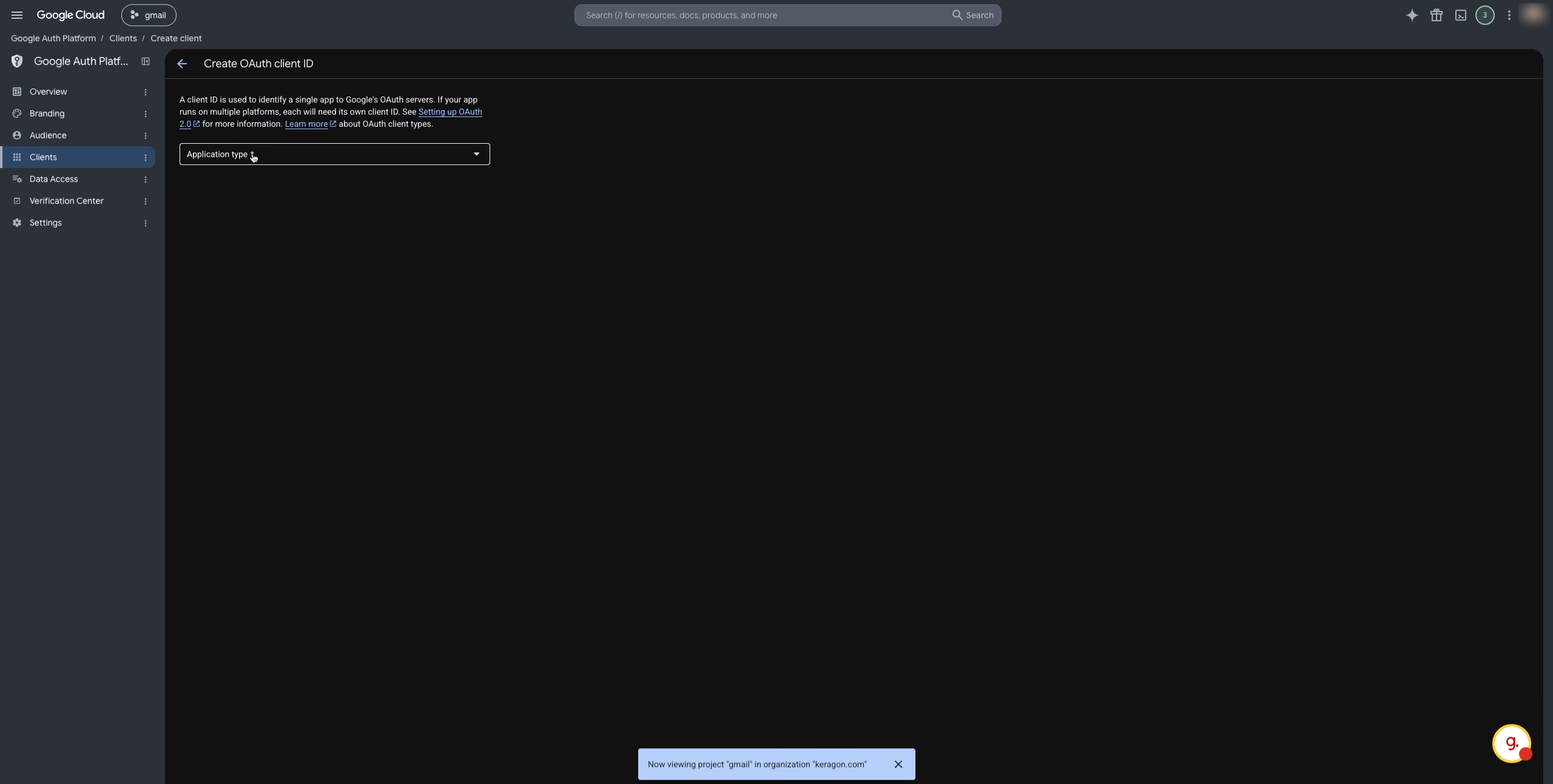
7. Configure Web Application Client
For the application type, select web application, give it a name, and add the redirect URL.
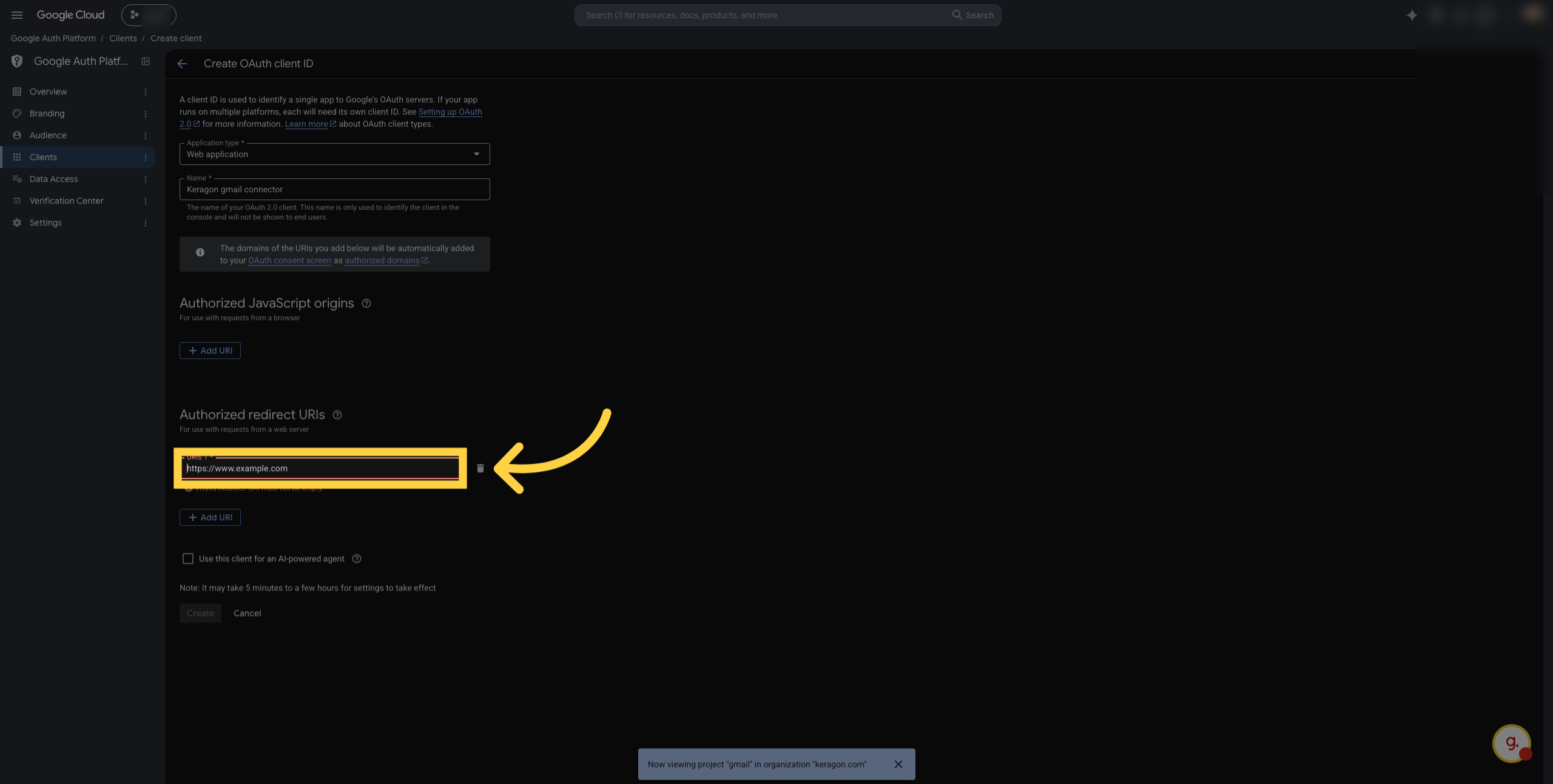
8. Access Redirect URLs
Click URIs 1 to add https://api.us-east-1.keragon.com/rest/auth/callback for your OAuth client.
9. Create OAuth Client ID
Click Create to generate your OAuth client ID.
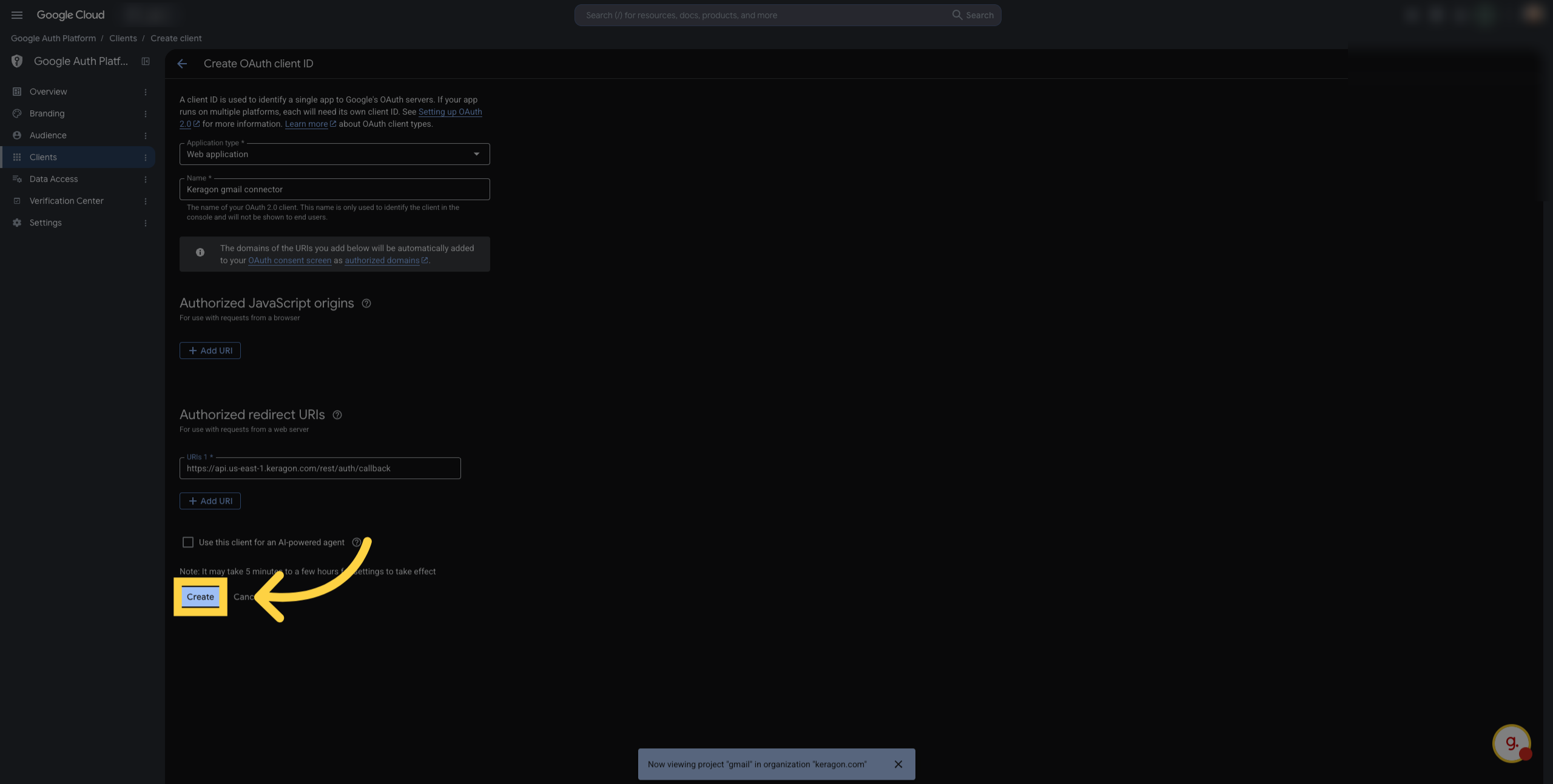
10. Generate Client Credentials
Create and download your client ID and client secret for authentication.
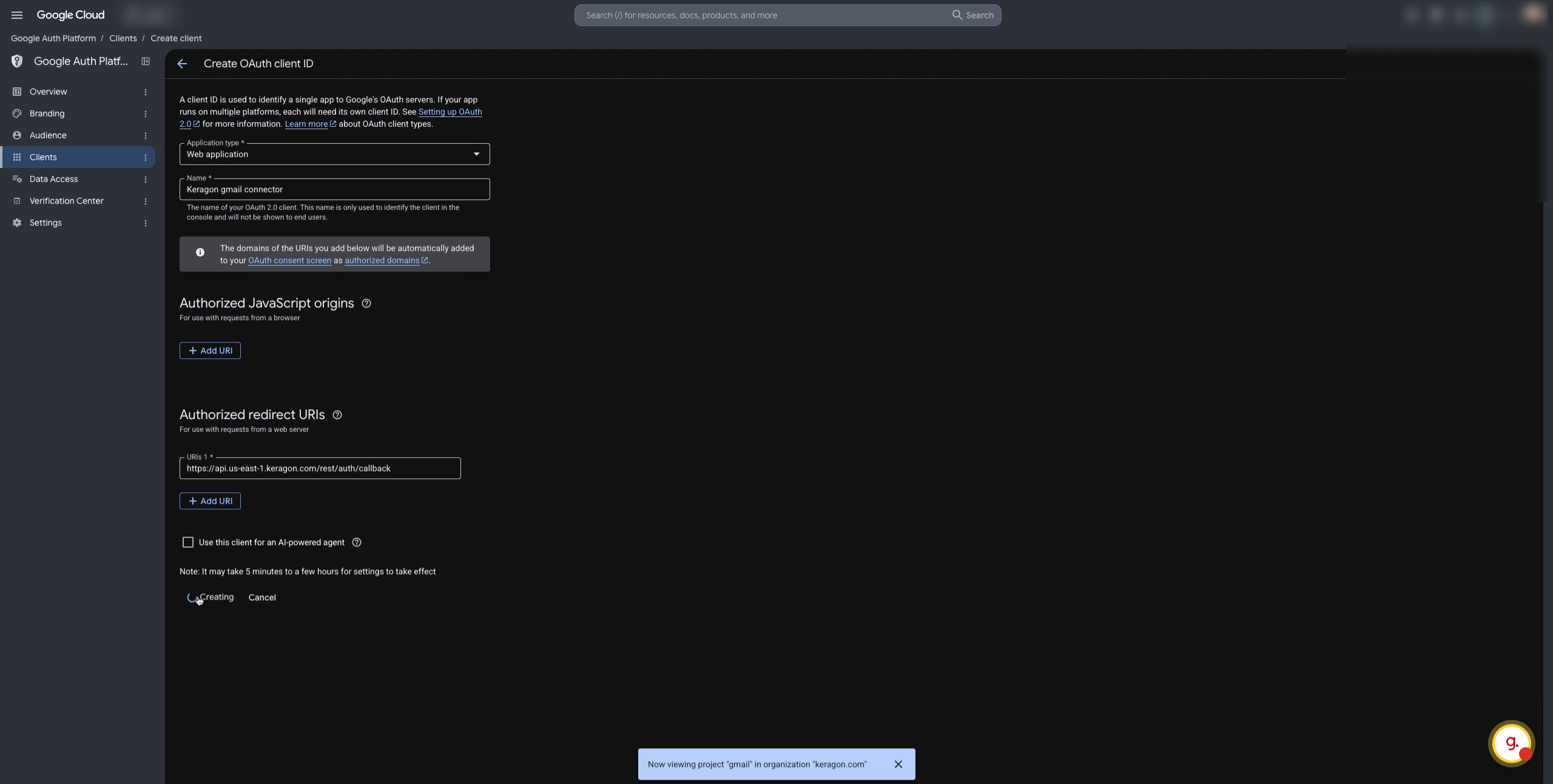
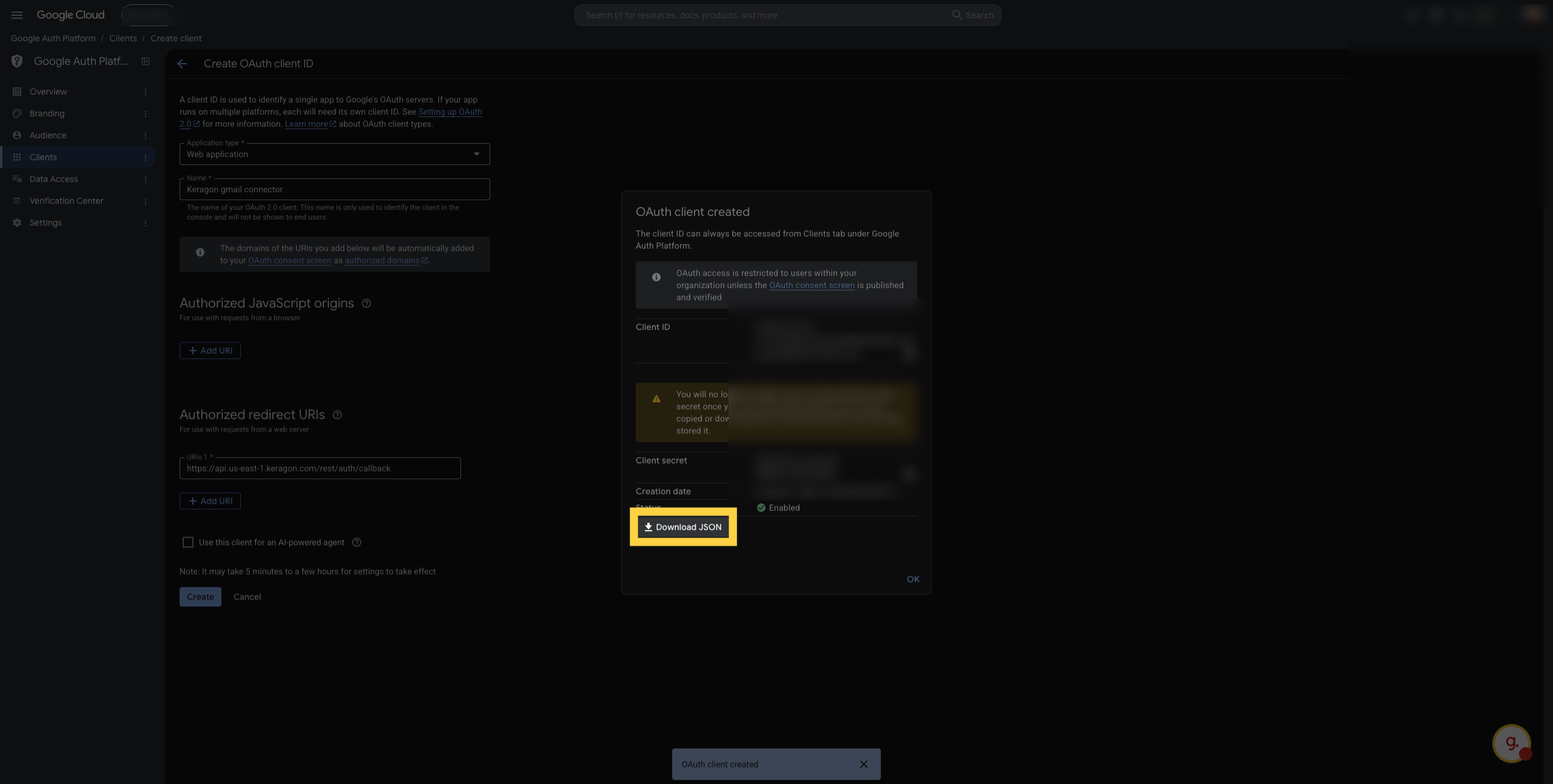
11. Download Credentials JSON
Click Download JSON to save your client credentials file securely.
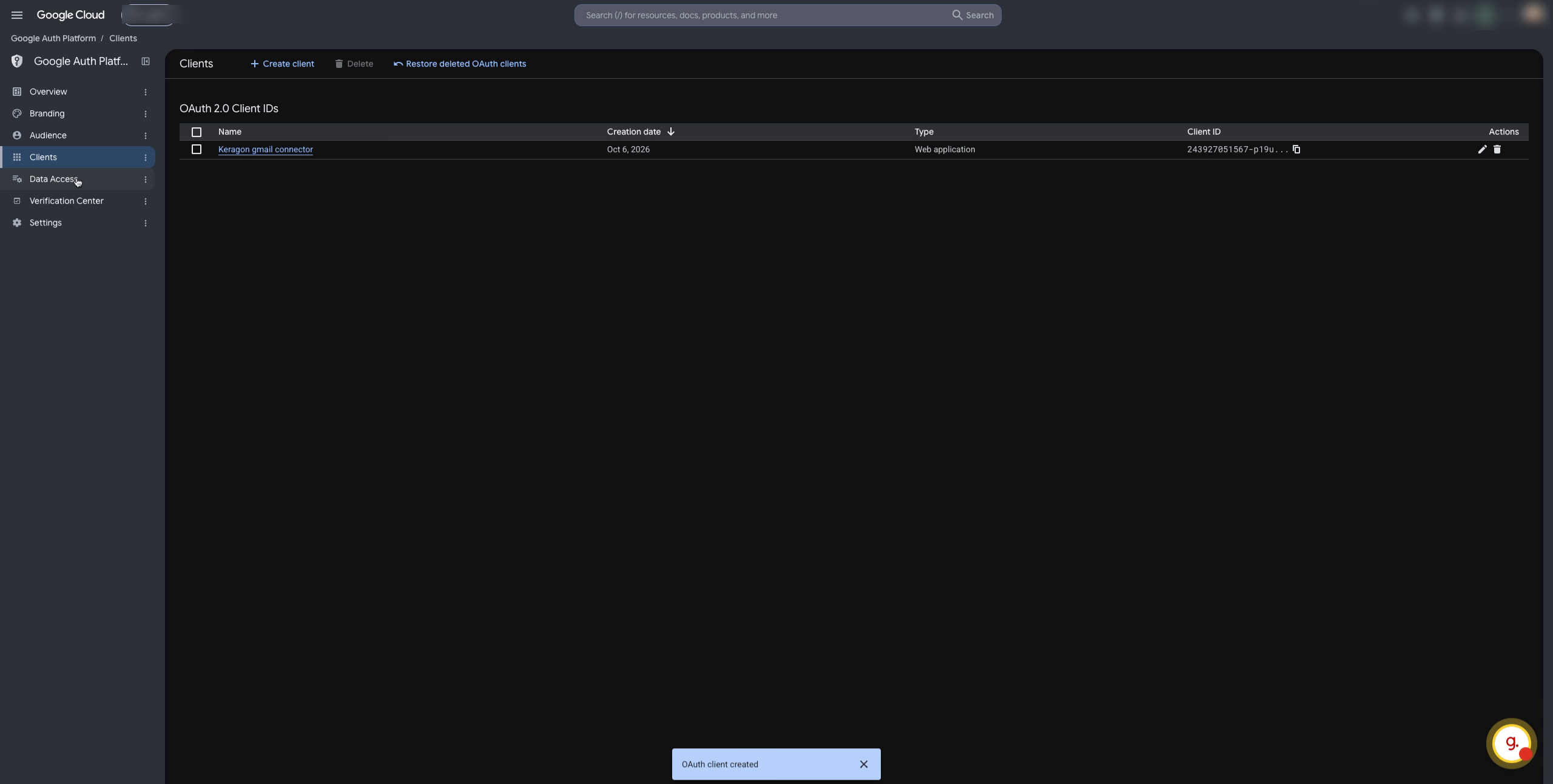
12. Manage Data Access Scopes
Go to Data Access and click Add or Remove Scopes to configure permissions.
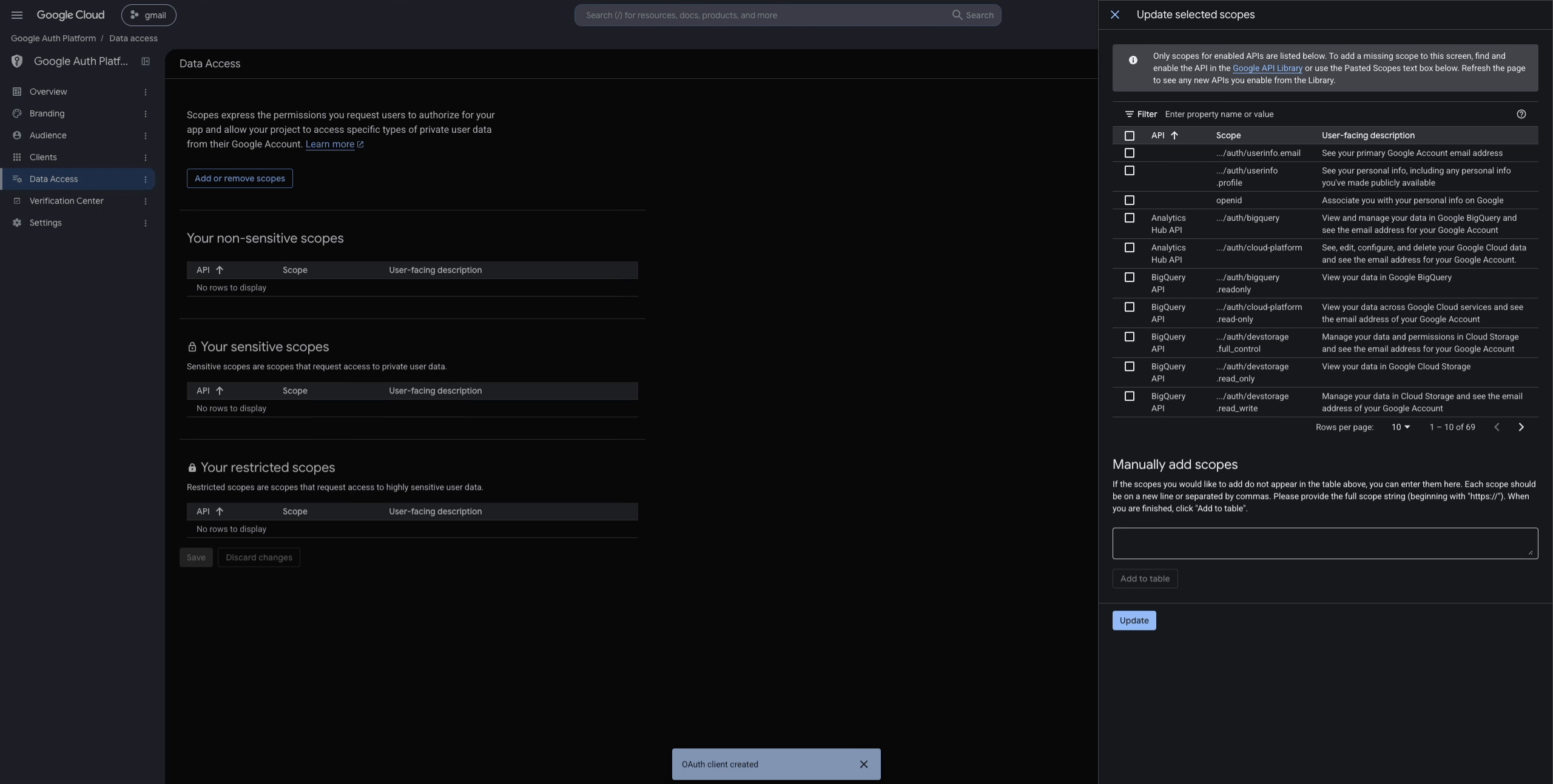
13. Add Scopes Manually
Manually add scopes
https://www.googleapis.com/auth/gmail.send
https://www.googleapis.com/auth/gmail.settings.basic
https://www.googleapis.com/auth/gmail.readonly
https://www.googleapis.com/auth/gmail.modify
https://www.googleapis.com/auth/gmail.compose
click Add to Table, and select Update.
https://www.googleapis.com/auth/gmail.send
https://www.googleapis.com/auth/gmail.settings.basic
https://www.googleapis.com/auth/gmail.readonly
https://www.googleapis.com/auth/gmail.modify
https://www.googleapis.com/auth/gmail.compose
click Add to Table, and select Update.
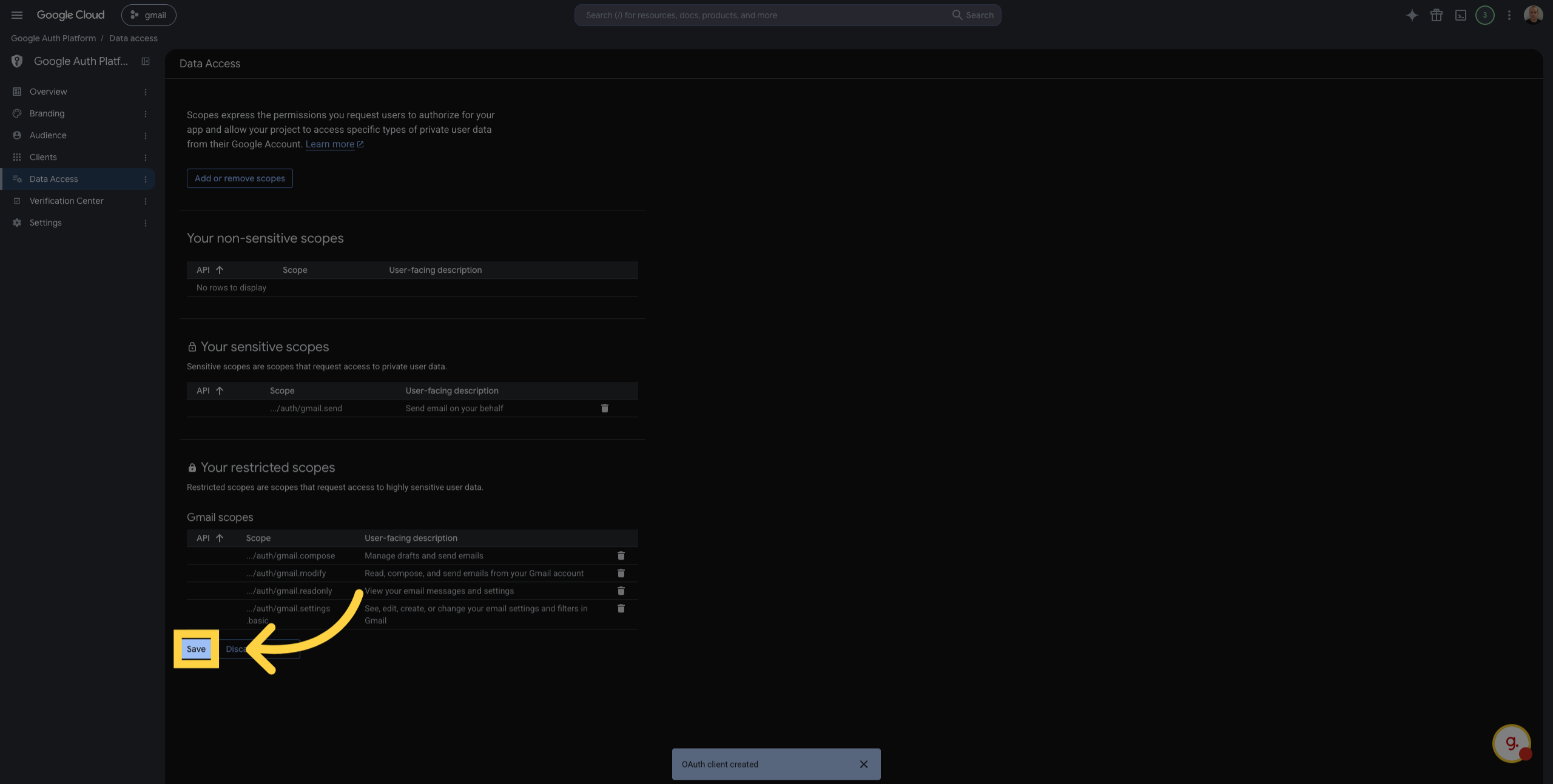
14. Save Scope Changes
Click Save to apply your data access scope changes.
This tutorial guides you through configuring a Gmail connector by creating a project, setting up OAuth credentials, managing data access scopes, and finalizing the app setup in Google Cloud console.